
FISHING & OTHER ACTIVITIES
By October the rains have finished, the harvesting is done, and the long dry season begins. By November or December, the grazing and water around the villages starts to dry up, and the people begin to start thinking about the toic again. The cattle are moved away, following the receding waters. They are herded and looked after by some members of the family, while others, including the elderly and infirm, stay at home in the village. Grass is burned in December to allow fresh grass to come up. By February most of the people are in the toic. During this time, fish form an increasing part of the diet. The fish become trapped in pools as the swollen, flooded rivers recede, and can be caught quite easily either with spears, or even by hand. The swamp waters dry up rapidly under the blazing dry season skies and the grass withers and fades. By April the grazing and water are again in short supply and the cows and people are hungry. Fishing continues on the rivers, and wild fruits supplement the remaining grain supplies. This is traditionally a time of hunger. However, all being well, the rains return in May and June and the move home commences again.
A boy fishes while a woman carrying a dieny walks past along the dyke
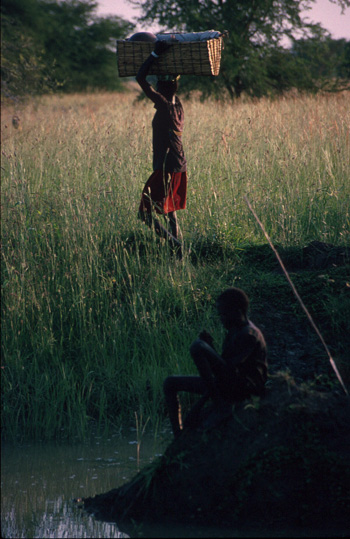
This dyke ran for several miles, keeping the flood waters away from a village. The flood waters are full of fish. The woman is moving between villages. A dieny is an all purpose basket, and is often used for carrying little babies, as well as fish, grain or other produce for bartering at the local market.
Dried fish, Pibor river
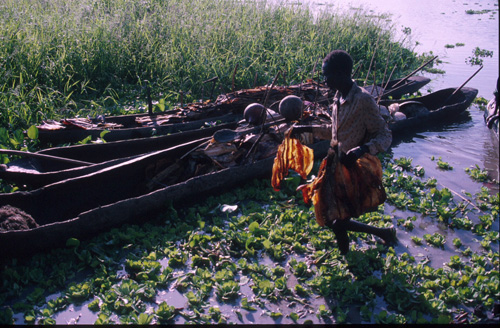
Fish provide an important part of the diet, particularly in the dry season. Everyone fishes locally, but those who live by the main rivers fish more, dry their surplus and trade it for livestock and crop products.
A blacksmith at work
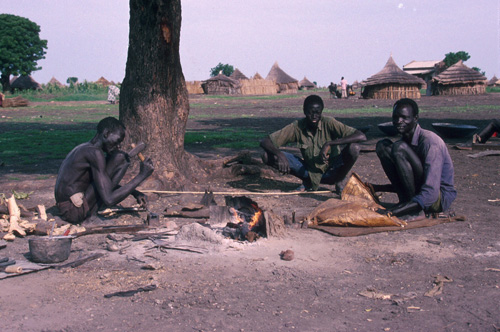
Any spare metal is used to make utensils ranging from spears to hoes to spoons. The goat skin bellows blow air into the little semi-circular furnace. Blacksmithing is a relatively new skill amongst the Dinka and Nuer, who traditionally would have traded for any metal implements.
Blacksmiths’ work is mainly a dry season activity, particularly the preparation of implements of cultivation, which need to be ready when the rains start. The blacksmith will be paid in cash or in kind (tobacco, labour on his farm, grain) depending on the local situation.
HISTORY & WAR
The long civil war within South Sudan ended in 2005. Sudan, like many countries in Africa, was newly created this century. Many different tribes with age old differences in beliefs, customs and ways of life were put together as one of the largest countries in the world. Suddenly the people were expected to get along and work together - a difficult challenge.
Modern weapons have made traditional disputes very destructive.
War and the ongoing conflict in South Sudan stops people from cultivating as much land and growing as much food as they could. Military activity tends to take place during the dry season as it is easier for soldiers and their equipment to move around when the ground isn’t muddy, so displacing people at the time when they are already short of food. Militias will deliberately disrupt civilian community life at the time when people ought to be planting crops just to create instability. People choose to live in remote places because they are safe from conflict, even if they are known to be not so productive.
The people driven from their homes and villages become ‘displaced’ and have no alternative than to move to distant areas of safety and throw themselves on the mercy of relatives, friends or even complete strangers. The custom in South Sudan is to share food with visitors. Even if everyone is anticipating a difficult dry season, they use their food reserves to help the displaced, so leaving themselves short as the dry season progresses.
It must be stressed that there is no absolute shortage of food in South Sudan (or in the world). Famines generally result from political manipulation and greed.
AK47 and rucksac
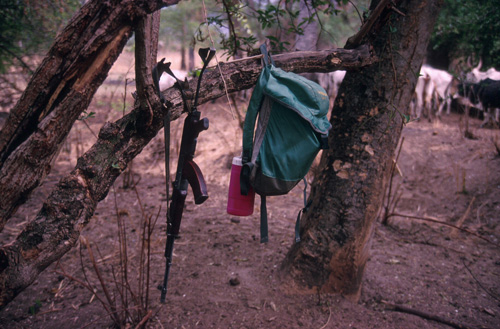
Automatic weapons are a part of everyday life in many parts of the world. Conflict in South Sudan has numerous effects on normal life. It drains people, particularly men, from their communities, greatly increasing the proportion of ‘female headed households’. This is a particular problem in a place where everyone in the family has particular work to do to ensure survival on a day to day basis. Leaving aside customary gender division of labour - human society can be very flexible - it is just not possible to herd adult cattle and look after children and small stock around the home. Insecurity makes it difficult to plan ahead. Warfare also disrupts traditional education. Many young people are no longer properly equipped with the skills and knowledge of local ecology to survive in this demanding but rewarding environment.
Village destroyed by conflict 1
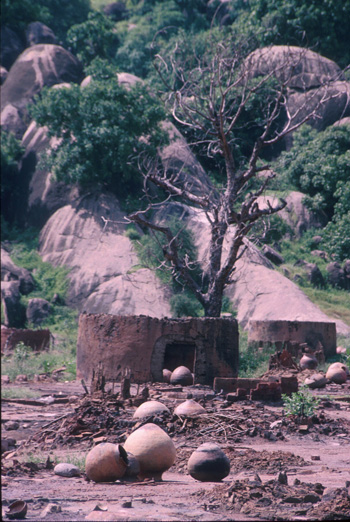
This village was destroyed during the civil war one night as a lesson to a minority tribe who were considered not supportive enough to the local rebel faction. Anti tank mortars were fired into the huts as people slept. Those who survived fled to the surrounding bush and became ‘displaced’. Months later they returned to rebuild the village.
Village destroyed by conflict 2
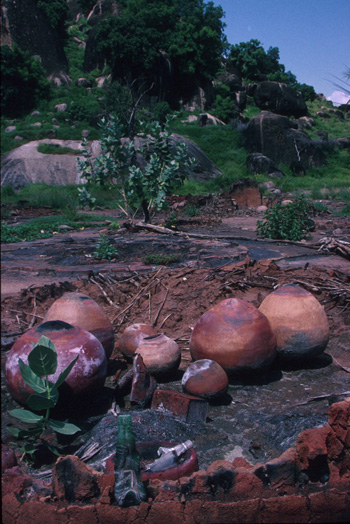
Water and grain storage pots are valuable possessions. People clearing up after the attack have collected the family pots together in the shells of the burnt out huts, ready for when the survivors return.
Village destroyed by conflict 3
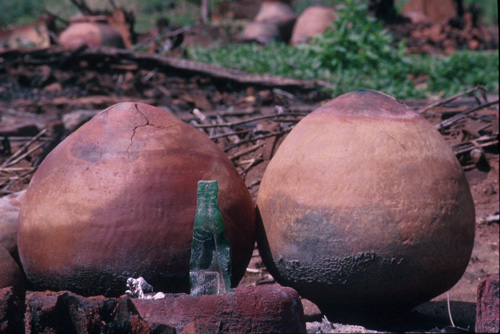
This Schweppes soda bottle was flattened by the heat of the blast when the mortar hit the hut; the little lump of metal beside it is the remains of an aluminium cooking pot.
Amputee
Warfare leaves behind obvious physical trauma and not so obvious mental trauma. People affected are not always able to undertake the many tasks needed to survive.
Displaced people
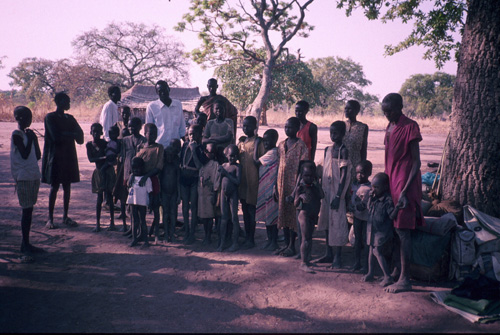
Those not killed or wounded often have to move away from their land and from the places they know and understand. They become ‘displaced’, moving with their possessions in search of security.
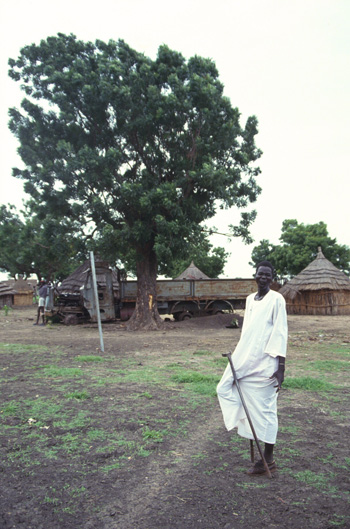
Old man, dairy camp
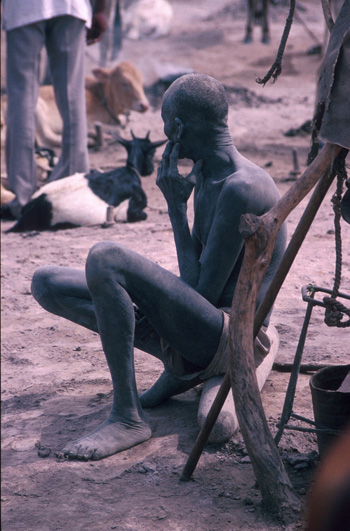
These changes are occurring fast, and leave people disorientated. The normal flow of information between generations is disrupted.
Contents
History & War
A boy fishes while a woman carrying a dieny walks past along the dyke
Dried fish, Pibor river
A blacksmith at work
HISTORY & WAR
AK47 and rucksac
Village destroyed by conflict 1
Village destroyed by conflict 2
Village destroyed by conflict 3
Amputee
Displaced people
Old man, dairy camp
Next page
Previous page
