
AID
When people are starving to death, clearly there is a humanitarian need to provide assistance. Unfortunately it is not always easy to provide this assistance sensitively. Aid itself can become a weapon. There is no simple answer to the question of how to provide assistance to communities without further destroying those communities in the process.
Nevertheless, many organisations are now trying to deal with ‘relief’ and ‘development’ together, as part of the same process, and recognise that there is useful work to be done in conflict resolution and in the management of trauma. They are aware of the danger of aid undermining surviving local markets; and try to support local institutions as far as is practical. Local participation (of ordinary women and men, even children, as well as community leaders) is seen as one way to move ahead constructively.
The following photos show different aspects of relief and development work in South Sudan.
Unloading a Buffalo aircraft
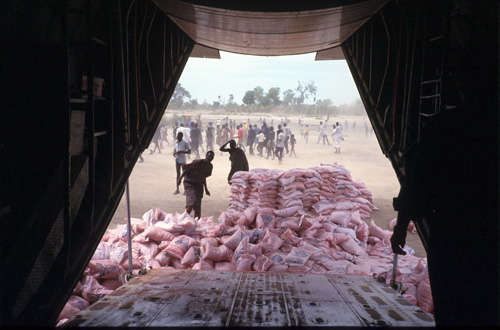
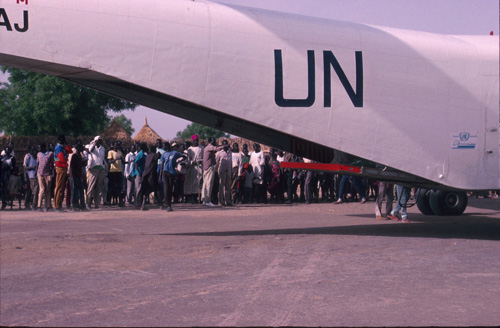
For political and physical reasons, most aid into South Sudan has to travel by plane, making the aid programmes very expensive.
Buffalo aircraft tail
Emergency food aid: Sharing a biscuit
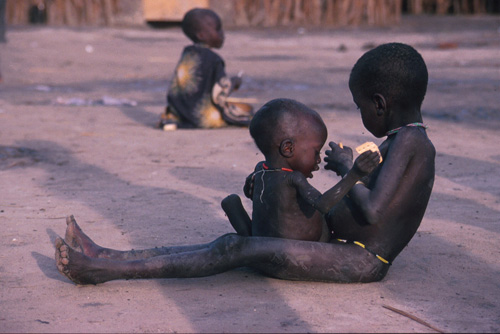
Food camps, though they get much publicity at times of extreme stress, are but a small part of the work that is being done by non-governmental agencies in South Sudan. Nevertheless, for victims of war, they are a lifesaver.
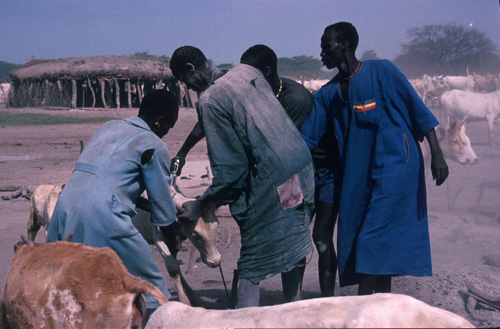
Livestock programme: Rinderpest vaccination 1
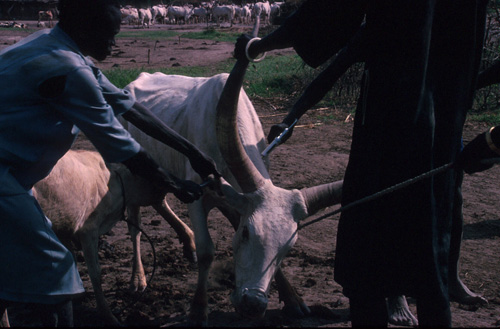
Livestock programmes in South Sudan can be successful and popular. Local people are extremely knowledgeable about their animals and know that keeping them alive is the way to keep their families and communities alive. The livestock programme described here primarily trained local community animal health workers to vaccinate the animals of their own communities against Rinderpest. Rinderpest was the world’s worst disease of cattle. A severe outbreak of Rinderpest could kill 90% of a herd within a few days. The community animal health workers are also trained to use some other vaccines and drugs, to complement their existing local treatments, knowledge and skills.
This slide shows a cow being vaccinated against Rinderpest, and having its ear marked to show that it has been vaccinated. The Riderpest vaccination campaign in South Sudan, carried out under extremel chalenging conditions, was successful. The disease was readicated from here and the rest of the world in 2011. Rinderpest was one of the most feared veterinary diseases world wide, including Europe in earlier times. It is the first animal disease virus to be eliminated from the world.
Livestock programme: Rinderpest vaccination 2
Water programme: A village water pump
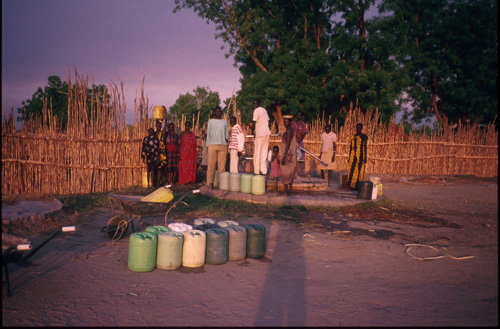
Water programmes help to construct wells and boreholes from which people can get clean drinking water year round. This is important for human health as dirty water can carry diseases and parasites. In some places, water programmes also train local people in pump maintenance so that they can then look after the boreholes themselves.
Health programme: Morning light and mosquito nets at a village hospital
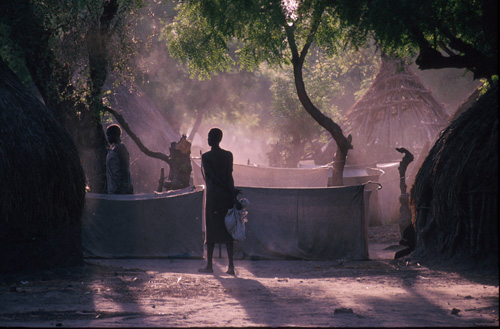
Human health programmes tend to concentrate on teaching primary health care. An example of this is the use of oral re-hydration salts for children with diarrhoea.
Education programme: School class by river
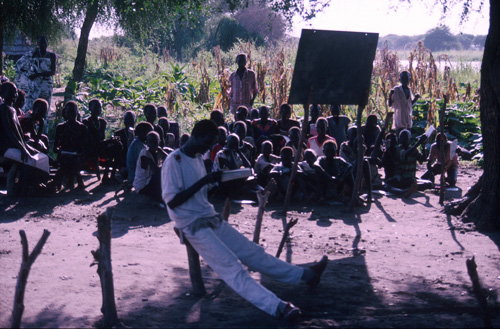
Education is very popular as people recognise it as a hope for the future. The challenge is to make it appropriate to the local way of life.
HOPE FOR THE FUTURE
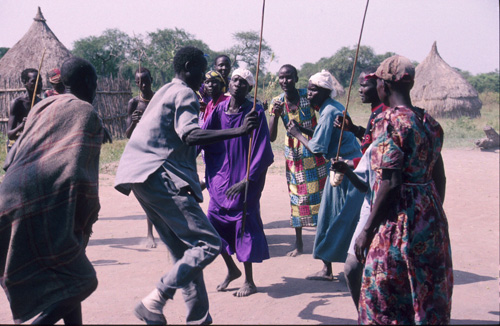
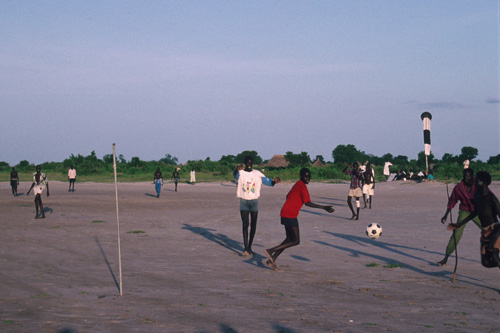
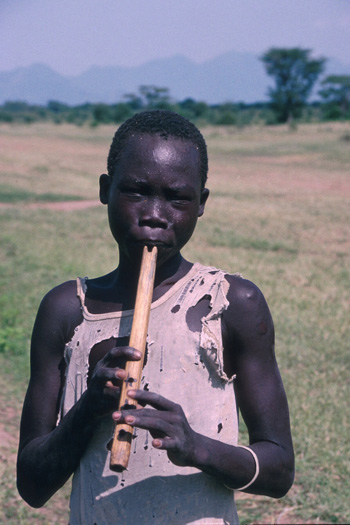
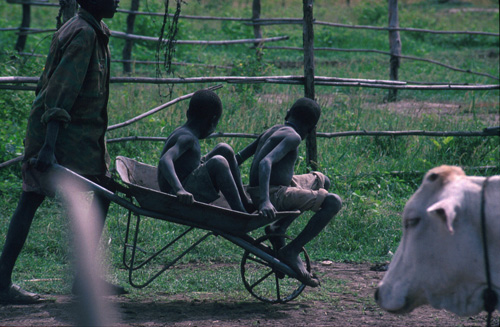
Despite the misery of ongoing conflict in South Sudan, there is still hope for the future. What is surprising about South Sudan is that most people have not become overwhelmed by circumstances. There is tremendous human potential. People are community minded, work hard, and want to move on. People still take an active interest in the outside world, children still play, people make music and dance, and there are a lot of bright little children looking for an opportunity to progress.
Dancing
Playing football
Piper
Boys in wheelbarrow
Little boy
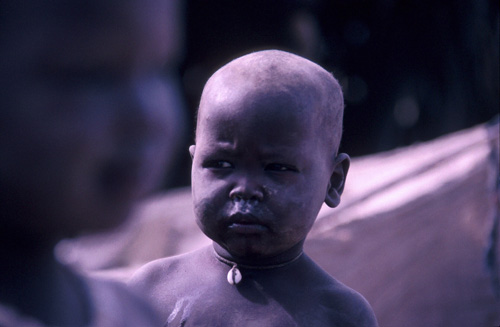
A little Dinka boy with stick
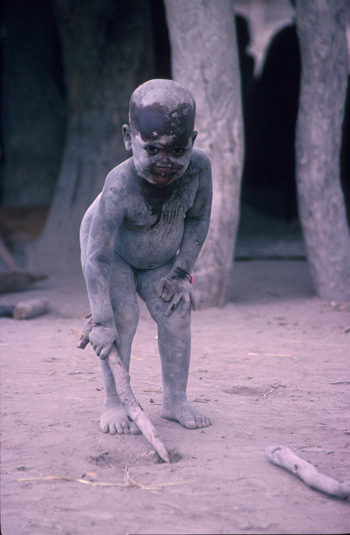
Ash covered to repel insects, this little boy plays with a stick.
What will the future be like for this little boy? The under development and conflict in South Sudan remains a tragedy. Nevertheless, Nuer and Dinka culture is strong, and people remain proud of their way of life and of the skills they need to live in this harsh but rewarding country. People remain hopeful that the conflict will eventually abate and that when it does they will have more control over their future. Education and access to impartial information are valued and seen as a way by which communities will eventually be able to take a more active role in the wider world.
Bird on a wire
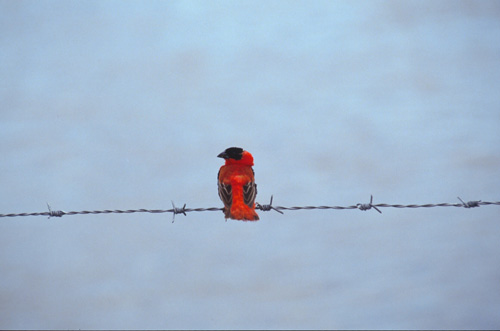
This is a ‘Red Bishop’ (‘kec kec‘ in Nuer). While large mammals remain only in isolated pockets, victims of war, easy prey to easily available modern weapons, birds, each a symbol of freedom and hope, are stunning and abundant in South Sudan.
Contents
Unloading a Buffalo aircraft
Buffalo aircraft tail
Emergency food aid: Sharing a biscuit
Livestock programme: Rinderpest vaccination 1
Livestock programme: Rinderpest vaccination 2
Water programme: A village water pump
Health programme: Morning light and mosquito nets at a village hospital
Education programme: School class by river
HOPE FOR THE FUTURE
Dancing
Playing football
Piper
Boys in wheelbarrow
Little boy
A little Dinka boy with stick
Bird on a wire
Previous page
